

Extraordinary ordinary people:
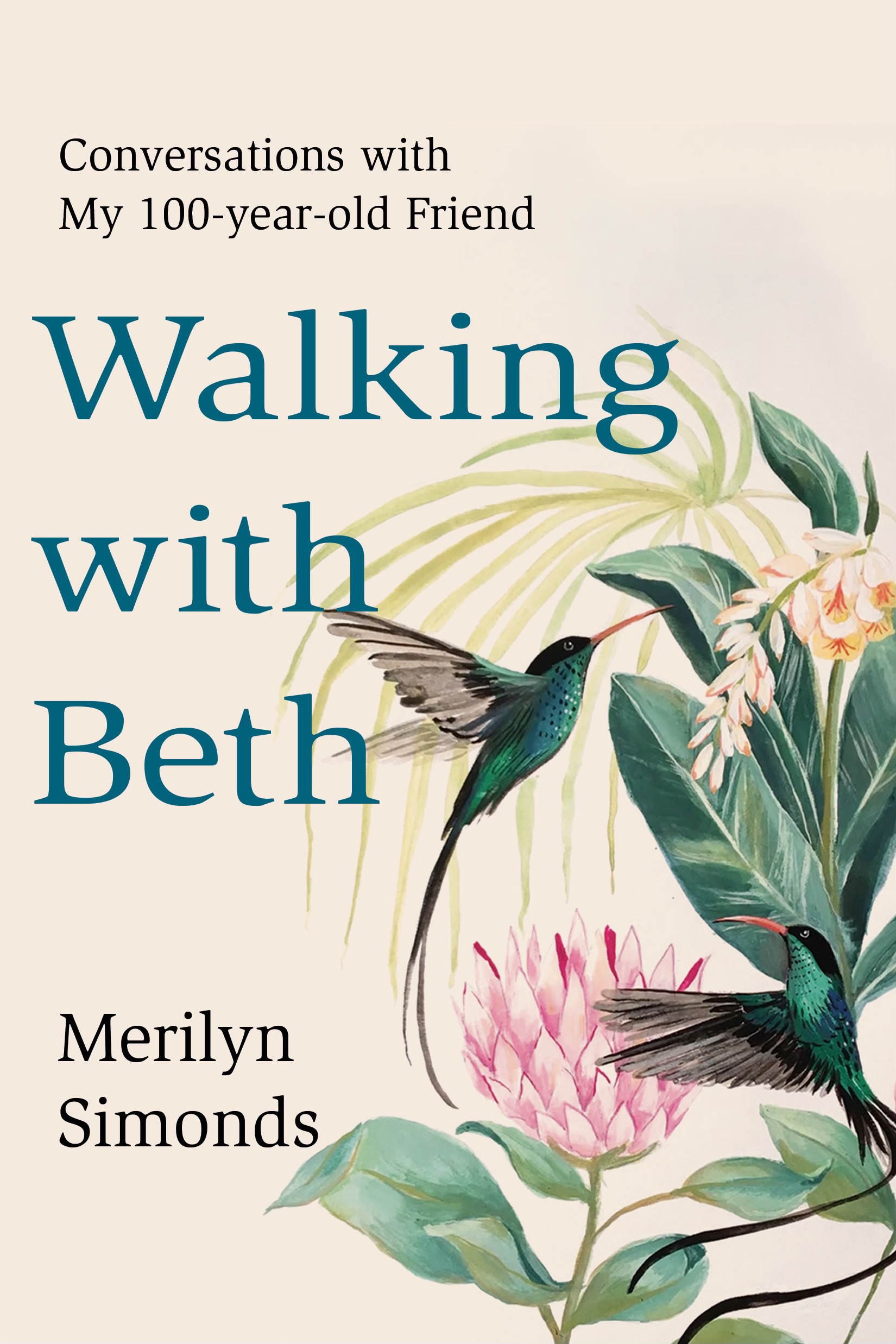
Merilyn Simonds and her new memoir, Walking with Beth

Merilyn Simonds is the prolific writer of twenty books of creative nonfiction, personal essays, fiction, travel, and memoir. Among many positions, she served as Chair of the Writers’ Union of Canada, is Founding Artistic Director of the Kingston WritersFest, and is heavily involved with the San Miguel Writers’ Conference in Mexico, where she and her husband Wayne Grady live through the winter. Her books have been on “best of the year” lists and translated into several languages, one still in print thirty-one years after its publication.
Merilyn and I got to know each other in San Miguel in February and again in Kingston this fall, when I taught a memoir workshop and did a reading at both festivals. Not long ago, her publicist sent me an advance copy of her recent memoir, Walking with Beth, the chronicle of her deep friendship and walks with Beth Robinson, who’s thirty years older: when the book begins, Merilyn is seventy-one, and Beth is 100. They walk or at least talk every week when possible, speaking about many things, including art, love, aging, friendship, the different stages of life, and, inevitably, death. When Merilyn presented the book at the Kingston WritersFest in September, Beth, who is now 105, was not only there, she bounded onstage to a prolonged standing ovation.
I recently spoke to Merilyn on Zoom about the book and her process as a writer.
I began by congratulating her on the instant success of this tender, thoughtful, beautifully written book; amazingly for a Canadian memoir, it hit all three key bestseller lists at once. She credits the media blitz her publisher set up for her, including a CBC documentary, but also feels this book came out at exactly the right moment, that it’s a “poster book for intergenerational friendship,” a subject of increasing interest. She believes many young people are part of the “maker revolution”—making crafts, recycling clothes, baking — and that includes friendships over generations. The “silo-ing of our society” is unfortunate, she feels. “In Mexico, there are often four or five generations living in the same house. We don’t honour elders as they do,” she says, “and as we used to.”
I tell her the pace of the book, begun at the start of the pandemic, feels like a walk, deliberate and meditative. That wasn’t done purposely, she says; the book at first had no real structure. She wrote each chapter individually, then, in her big studio in Mexico, she threw all the chapters on the floor and walked among them, looking for the shape. Sometimes, she notes, a topic would return, giving the book in the end a circular feel, not unlike life.
Beth Robinson worked as an art therapist, held important volunteer positions, and has published several books herself. She is a positive woman; although she’s been a widow for decades and lives on her own, she keeps busy, immersing herself in her passions. She regularly meets friends of all ages— “a steady rhythm of shared connection,” Merilyn calls this in the book — and creates collages and art installations; her social life and art keep her alive to the world. She lost her only daughter a few years ago and is still grief-stricken, although Merilyn reports on Beth’s comforting ritual; she lights a candle in a lantern every night to feel her daughter’s presence. “She’s one of the most present people I’ve ever met,” says Merilyn, who calls her friend “an icon of possibility” for everyone she meets.
Imagination and creativity, Simonds suggests, might be the secret to thriving in our final decades, and certainly, Beth is proof of that. As they walk, she and Merilyn share their passionate love of colour, dance, art, nature, words, gardening, travel, and more.
Simonds herself goes through a nightmare time in the book, afflicted with a rare, excruciating condition called Giant Cell Arteritis; we watch a strong, independent woman cut down, bewildered and terrified at her sudden lack of health, autonomy, and memory. She usually does not write about deeply personal matters, but felt she couldn’t leave her illness out of the book — because “being there for each other is an important component of a good friendship.” Beth noticed Merilyn’s vulnerability and pain and stepped up without being asked. Our culture, the writer notes, doesn’t often validate that kind of thoughtfulness.
I tell her I’d enjoyed her books Woman Watching and A New Leaf; the latter shows off her exceptionally detailed and in-depth knowledge of gardening. “That comes from curiosity,” she says. “I’ve accumulated a lot of knowledge over the years, just by being curious. That’s an important trait to develop as a writer, and as a person.”
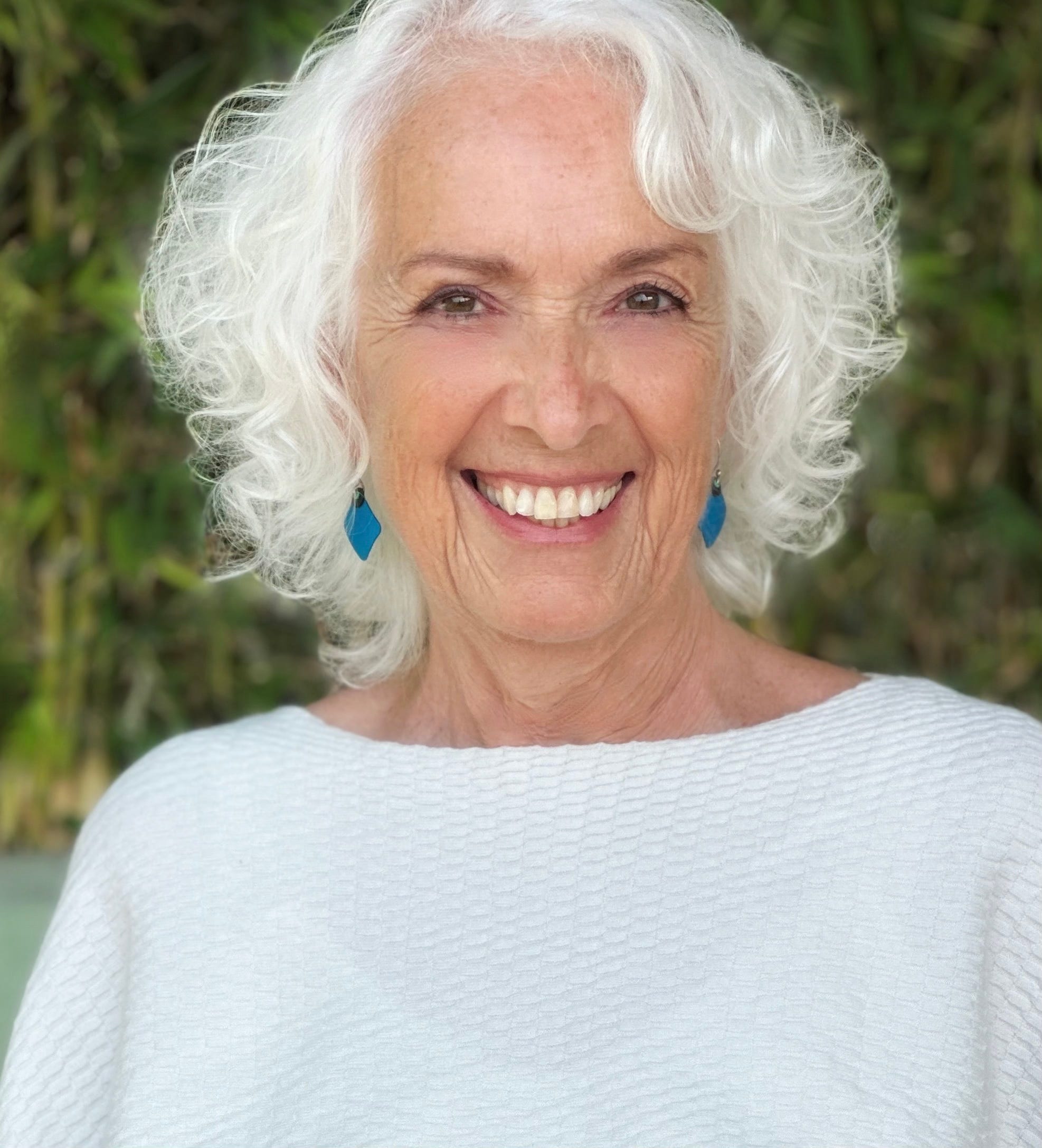
I ask if she taped her conversations with Beth and others, since they’re reported with vivid accuracy. “I never taped,” she says. “I’m lucky to have an extraordinary memory. I’m the family archivist. That’s why it was so dreadful during my illness, when I had steroid-induced dementia.” But that, she declares with relief, is gone now.
I point out that Beth comes from a well-known, important family, her father Lorne Pierce a fabled Canadian editor, her mother a renowned collector of Canadian glass, her great-aunt a noted feminist and suffragette. Yet Merilyn doesn’t bring up Beth’s familial connections until well into the book. “I did that deliberately,” she says. “I didn’t want her to be thought of as just a daughter, an appendage, someone of privilege.”
How does she choose the format and subjects for her books, which span such a wide array? “The material eventually tells me what it needs to be,” she says, “essays, fiction, creative nonfiction. I go where the material takes me. But I’ve realized that all my books revolve around what interests me most: extraordinary ordinary people.” She is already working on a new book, and sure enough, it’s about an extraordinary ordinary man. “He has a grip on me,” she says. “I’ve never written in a man’s voice before. Maybe it’ll be fiction.”
“I never think about the eventual reader,” she says. “My contract is with the material. My job is to get that material on the page in a way that’s honest and true. Selling it to readers is the publisher’s job.”
I mention that these days, unfortunately, selling their own work is also very much a writer’s job. She reminds me that writers should keep the needs of writing and those of publishing separate, that “publishing is a different world. Write what you need to write. Keep it to yourself,” she says. No one, not even her husband Wayne, a fellow writer, reads her work until she has finished. “It’s so delicate at that stage, like a child. I don’t want suggestions. When I’ve taken it as far as I can, Wayne reads it. And then it goes to my agent and then to an editor. I love the editorial process, I love my ür-editor Anne Collins,” she says.
Does she have a writing routine? “I believe in the unconscious. I’m a morning writer, I get up and right into my office, spend four or five hours there. Then a walk. Then I do research into what has come up. An important tip I learned somewhere: I never stop writing at the end of a sentence or a chapter; that makes it hard to pick it up the next day. I stop midway.”
She writes the first draft by hand in a notebook, on the right side of the page so she can use the left side for edits and additional notes as the draft progresses. Then she transfers that draft to the computer. Eventually, she prints it out and makes notes on it by hand. “Remember,” she points out, “writing comes from the right side of the brain and typing from the left. We need both sides.”
After over an hour of intense talk about all this and much more, it’s time for Merilyn to get to work. I’ve been frantically taking notes, gleaning wisdom for my own writing process. I love the passage in the book, where Simonds brings up the Japanese concept of ikigai.
‘“Ee-kee-guy. It’s like an all-encompassing concept of work— what you are good at and what supports you financially, but also what you love to do and what is good for the world.” …
(Beth says) “Every day, at every age, you wake up, your eyes open, your whole being opens, and off you go!”
I grin. “That’s ikigai!”’
To encourage my own ikigai, I’m going to print out several quotes from this fine, evocative book and keep them above my desk:
“To be an artist is to believe in life. The soul cannot thrive in the absence of art.” Henry Moore
“The passionate heart never ages.” John O’Donoghue
“Friendship is the art of holding a mirror to each other’s souls.” Aristotle
“Anyone who writes is a seeker.” Louise Glück
“I look for happiness, and I find it.” Merilyn Simonds
Thank you for the inspiration, Merilyn and Beth. May your ikigai flourish, and your passionate hearts never age.
If you enjoyed this post, please consider subscribing, liking, or sharing. It helps get the word out about my writing — and might even lead readers to buy a book, be still my beating heart! You can also read my blog via the link below. Many thanks.
There's a long queue at the library for this one. It sounds irresistible.