

LOVING PAUL:
Turning both past and present into essay

People who know me for any length of time will eventually hear about my love for Paul McCartney, the best Beatle, who’s been a fixture in my life since the age of thirteen. Most women who have teenaged idols get over them and move on. Older, I did fall in love with boyfriends, and for ten years, a husband. Paul was not foremost in my heart. But when I started to go see him in concert, he returned, and there he has stayed.
I am not alone in my ardent admiration for this man. British journalist Caitlin Moran wrote recently, “When pop stars get famous, what they do is they bang countless teenaged girls, do a ton of drugs, and behave like an asshole for ten or fifteen years. What Paul McCartney did when he got famous was marry a single mother from New York and move to Scotland where he learned to thatch his own roof and make his own bread. He rebelled against what successful men are supposed to be like. He saw being a husband as an art, being a father as an art. He saw a joy in ordinary life.
I could base a small and beautiful religion on the teachings of Paul McCartney. I think he’s one of the wisest people who’s ever lived.”
Me too, Caitlin. Me too.
A few months ago I wrote an op-ed about an upcoming concert and sent it to two sections of the Globe and Mail. No interest. Because I was busy, I didn’t send it out anywhere else. One of the jobs of a freelance writer is to keep on top of the marketplace, the venues for our kind of writing, and to keep sending and pitching, pitching and sending. This, like marketing, is one of my least favourite parts of the job. Margaret Atwood does not have to figure out where to send her writing. The rest of us do.
But who needs the Globe? Happily, I have this Substack and can now share the piece with you.
As those beloved boys sang, “With a love like that, you know you should be glad.”
My life as a Paul girl
In mid-November, I’ll be going to Montreal to spend a few hours with one of the great loves of my life. I’ll sit in a packed arena with fans of every age and demographic, and for the tenth time, I’ll watch a phenomenal musician and his superb band. I will cry. I always do. Because the man and his music rip open my ribcage.
In January 1964, after hearing my friends in our Halifax school chatter on about an exciting new British group, I decided it was time to listen for myself. I was thirteen, the youngest in my grade nine class, way behind my classmates musically and socially. But on January 14, after my parents went out to a Ban the Bomb meeting, I rushed to twiddle the dial of our big brown radio from CBC to the CHNS hit parade. What burst out of the speaker was “She Loves You.”
The song stirred my blood, as if I’d been waiting for just this sound to wake me up and flood me with energy and confidence and passion. When the music ended, I was transformed — no longer a kid, now, just like that, I was a teenager. I rushed to call my friend Lea, a Beatlemaniac for two months already. She told me the good news: though one of them was married, the other three were single! Hope for us!
A few weeks later, I brought home my very first LP, “With the Beatles.” Slipping the big black disc onto my pink portable record player, I didn’t know I was about to embark on a love affair that would last over sixty years. But when Paul McCartney began to sing the ballad “Till There Was You,” I heard a clear voice, soft, sweet, pure. My insides dissolved, and I knew. Every teen then was intent on choosing their favourite Beatle. Lea had picked John, but he seemed sort of hard-edged, and anyway, he was married. I was a Paul girl.
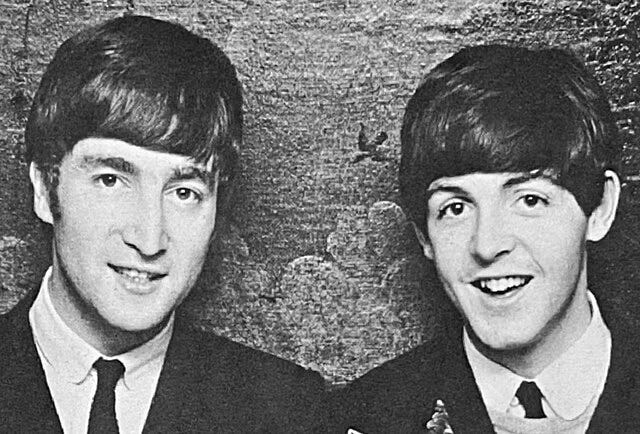
For months after, I obsessed about my Beatle, even as my family moved that summer of 1964 to live for a year in France. All I wanted was to be home in Halifax with my records and my friends, and instead I was stuck in a Parisian suburb where I knew no one and had only a tiny transistor radio. What kept me company that difficult year was writing romantic stories about me and Paul. He was my boyfriend, helping with my arithmetic homework, then my fiancé singing to me as we roasted marshmallows by the fireside, then my husband driving us around in his sleek Aston-Martin. In one story, he’s in hospital dying of pneumonia, but when I reach under the oxygen tent to hold his hand, colour floods back to his pale face, and he starts to revive. The doctor’s jaw drops. “It’s a miracle, Mrs. McCartney!” he exclaims.
I saved Paul’s life. Fantasies of him, that year, saved mine.
In June 1965, I was ecstatic to learn the Beatles were coming to Paris to play two concerts in one day. I attended both, held in a surprisingly small venue where the house lights were left on, and the audience was mostly older boys. At the afternoon show, I was seated a few rows from the stage, waving a big picture of Paul, when I caught his eye and he smiled and nodded down at me, right at me. He did. I wrote in my diary that if I’d died at that moment, it would have been at the pinnacle of my short life.
I was fourteen, and he had just turned twenty-two.
But a few years later, Paul mania faded for me. I dated real boys, finished school, launched a career. The Beatles broke up. I believed the weighty music pundits who said Lennon was the true creative force, McCartney the lightweight crooner of silly love songs. Paul in his unfortunate mullet gave concerts in cities where I lived, but I never went.
Then in 2008, it was announced that to celebrate the 400th birthday of Québec City, Paul McCartney would give a free concert on the Plains of Abraham. Why not, I thought, at age 58, indulge in a little free nostalgia? So I went, to the concert of a lifetime. Paul spoke his halting French, waved the flags of Canada, Québec, and England, and, for nearly three hours, sang one incandescent song after another. I sang along, weeping with joy, engulfed in a crowd of two hundred thousand blissful fans doing the same.
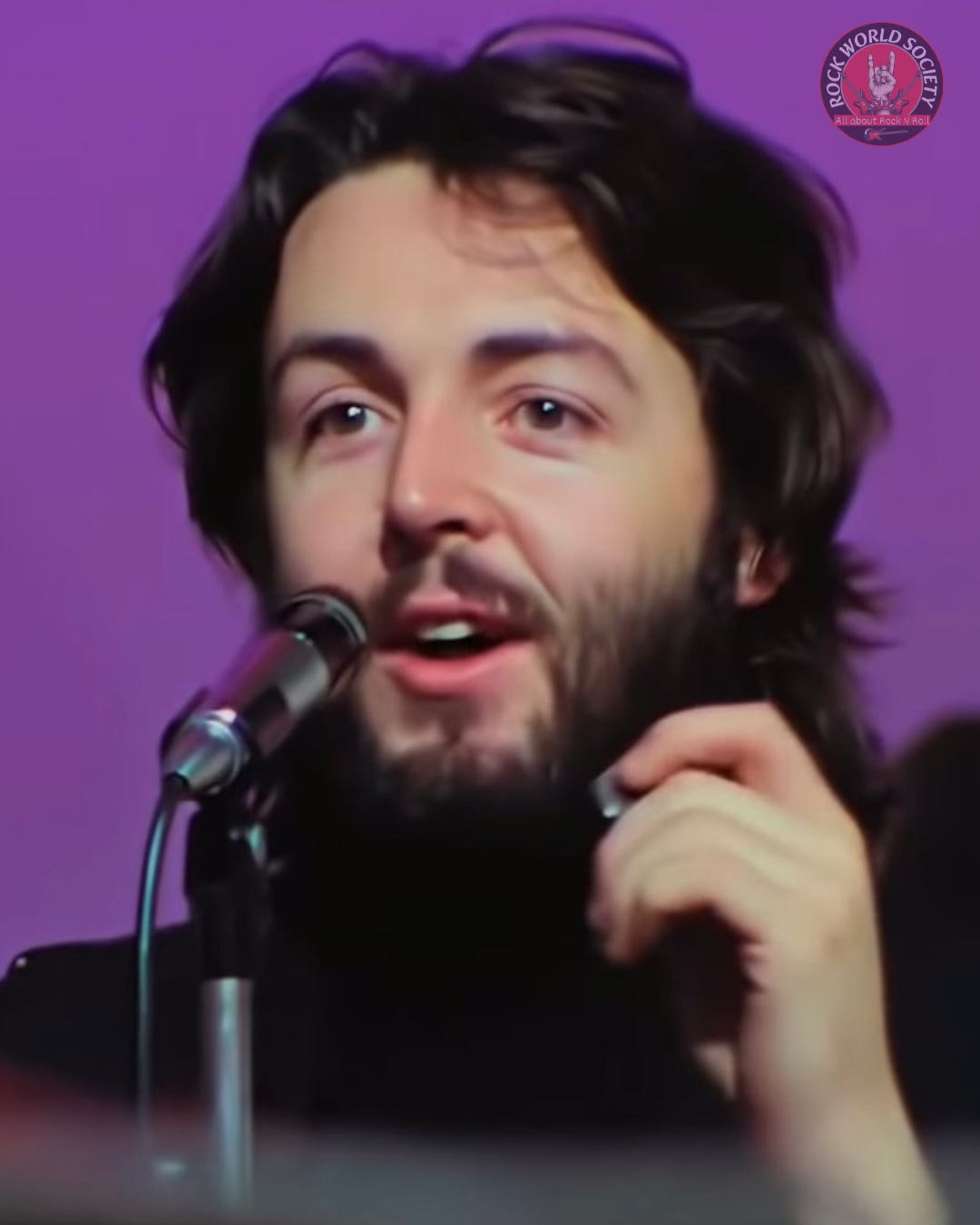
I was hooked again, glad to realize how wrong I’d been about my idol — to realize, as I read more about the Beatles, that Paul was the one who’d worked to keep the group together, the indefatigable genius always daring to try new things. I started when possible to attend his concerts — in Vancouver, Ottawa, Montreal, twice in Toronto. At one, I treated myself to an expensive sound check ticket, where my seat for the show was in the third-row centre. I was so close, I wanted to call up to him and remind him we’d nearly met once; to thank him for what he has given us all in his long career, the gifts of music and memory. But I didn’t.
My friends don’t understand my nearly lifelong love for a man who doesn’t know I exist, and whose voice now is certainly not what it was. I say, it’s enough he has written a hundred sublime songs: Hey Jude, Let It Be, Blackbird, Eleanor Rigby, Penny Lane, Here, There, and Everywhere, Yesterday, Maybe I’m Amazed, so many more. Let alone that he’s a fine man, a stellar husband and father, an animal-loving vegan, a concientious citizen of our planet. It makes me proud that at the age of thirteen I chose so wisely and so well.
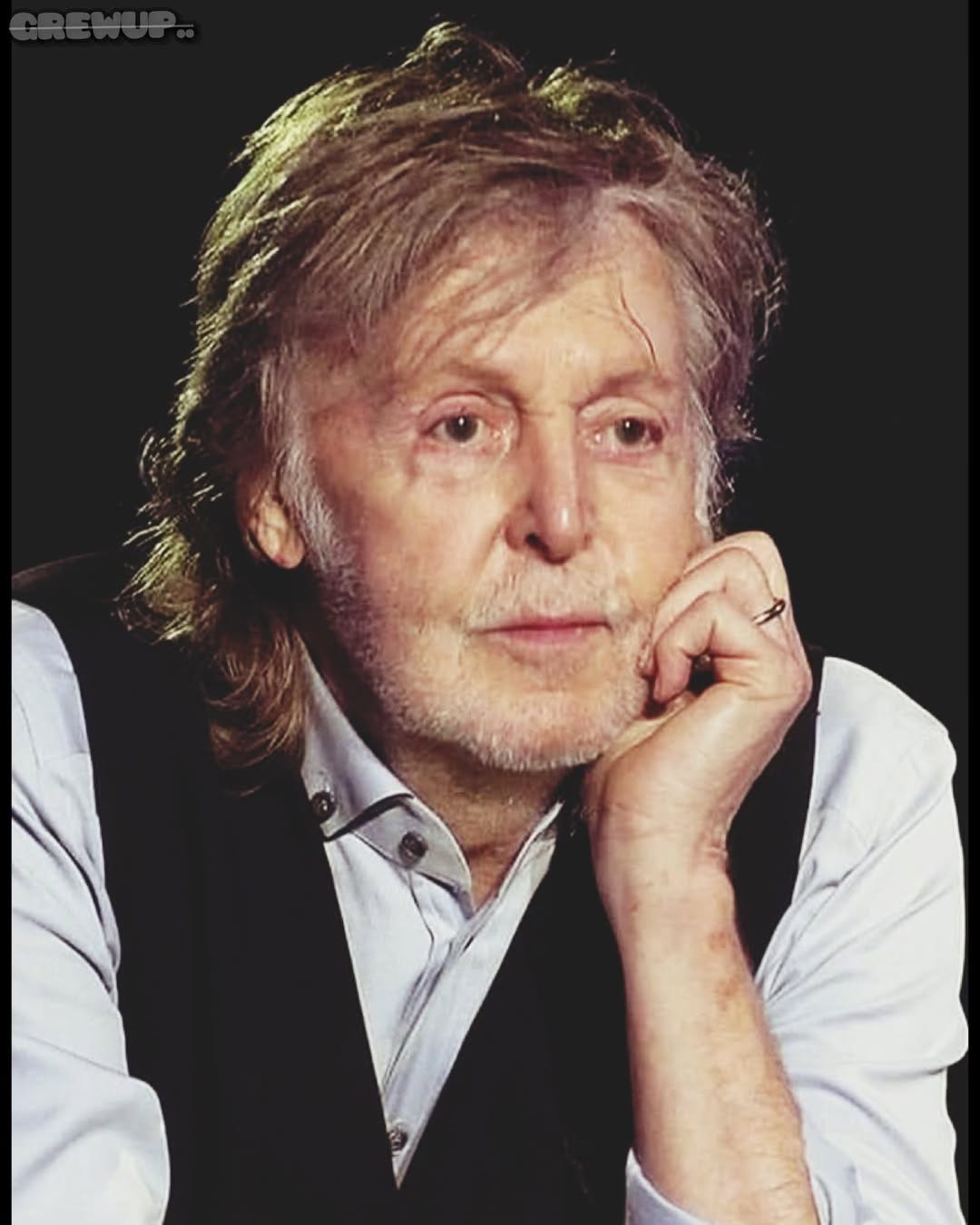
I’m going to Montreal in a few weeks because I need to see him once more, perhaps for the last time. He’s 83 now, and I am 75. How much longer, my beloved Paul, can we go on meeting this way?
P.S. My first memoir All My Loving: coming of age with Paul McCartney in Paris tells the story of that year in France.
If you enjoyed this post, please consider subscribing, liking, or sharing. It helps get the word out about my writing — and might even lead readers to buy a book, be still my beating heart! You can also read my blog via the link below. Many thanks.
Died? Pat, do you imagine Macca is going to die? Impossible. At the thought, my insides go cold; the world will go dark.
Glad you jumped on the bandwagon!
Too bad - wouldn't that have been something, to host them for a swim in your pool. I'm sure they could've used a rest! Thanks for sharing your memories, Lory.